

Medical ERP primarily refers to ERP (Enterprise Resource Planning) software for healthcare systems. Not to be confused with EHRs, which focus on clinical records, medical ERP integrates finances, HR, supply chain, and patient data into one system. This centralization increases efficiency by making it easier to coordinate care, security, and compliance with standards like HIPAA.
At Aloa, we build medical ERP systems through a consultative, end-to-end development process that takes a 360-degree view of your entire organization. This gives us a deep understanding of your goals and challenges, enabling us to quickly validate, build, and support features tailored to your unique workflow. With our AI-forward design process, you spend less time on integration, freeing you up to focus on what truly matters.
In this guide, we’ll explore how the latest ERP tech is changing the healthcare industry, from its various use cases to its far-reaching benefits. Let’s begin.
TL;DR
- ERP in healthcare integrates clinical, administrative, financial, and operational processes into a single system to improve efficiency, data accuracy, and decision-making.
- The centralized data and workflows that ERPs facilitate enhance collaboration, resource use, and compliance, ultimately leading to better patient care.
- Healthcare ERP systems are often specialized for various aspects of healthcare. Hospitals can have different ERP needs than clinics, and pharmaceutical and insurance companies have their own specific use cases for them as well.
- ERP provides various crucial uses in healthcare, such as centralized patient data management, administrative automation, and real-time analytics.
- To operate effectively, healthcare ERP needs to have interoperability, patient engagement portals, and strong data analytics capabilities.
- A well-functioning healthcare ERP system streamlines workforce management, supports key digital features such as telehealth, helps the organization assume a more agile posture, and improves staff coordination around patient care.
What Is Medical ERP?
Medical ERP integrates various processes into a unified system, optimizing data management, resource allocation, and decision-making. This centralized approach makes communication and collaboration between the business portion of a healthcare organization more efficient. Tailored ERP systems are even more beneficial, with features that address specific industry needs and functions.
Varieties of ERP Solutions for the Healthcare Sector:
- Hospital ERP Systems: These systems are tailored for comprehensive hospital operations and management, seamlessly integrating finance, administration, patient management, and inventory control to enhance overall operational efficiency.
- Clinical ERP Systems: Specifically designed to improve clinical workflows, these systems centralize patient data, support electronic health records (EHR), and facilitate communication among healthcare professionals, ultimately contributing to enhanced patient care.
- Pharmaceutical ERP Systems: Tailored for pharmaceutical companies, these systems adeptly oversee the entire supply chain, encompassing tasks from production and inventory control to ensuring regulatory compliance and facilitating efficient distribution.
- Health Insurance ERP Systems: Tailored for health insurance providers, these systems streamline policy management, claims processing, and adherence to healthcare regulations, fostering a more efficient and compliant insurance operation.
- Healthcare Financial ERP Systems: Tailored for financial management, these systems handle financial data, including medical billing processes, revenue cycle management, and financial statements, ensuring accurate and transparent financial processes within healthcare organizations.
The choice of ERP software depends on the unique requirements and objectives of the healthcare organization or sector. Many ERP systems in the healthcare industry are modular, allowing organizations to choose components that align with their specific needs and integrate them into a cohesive plan.
Uses of Enterprise Resource Planning (ERP) in Healthcare Industry
ERP in healthcare industry makes it easier for professionals to navigate the dynamic landscape of healthcare operations. Integrating Enterprise Resource Planning (ERP) is instrumental in transforming how organizations manage their functions. Let's explore the pivotal uses that render ERP an indispensable asset in healthcare management.
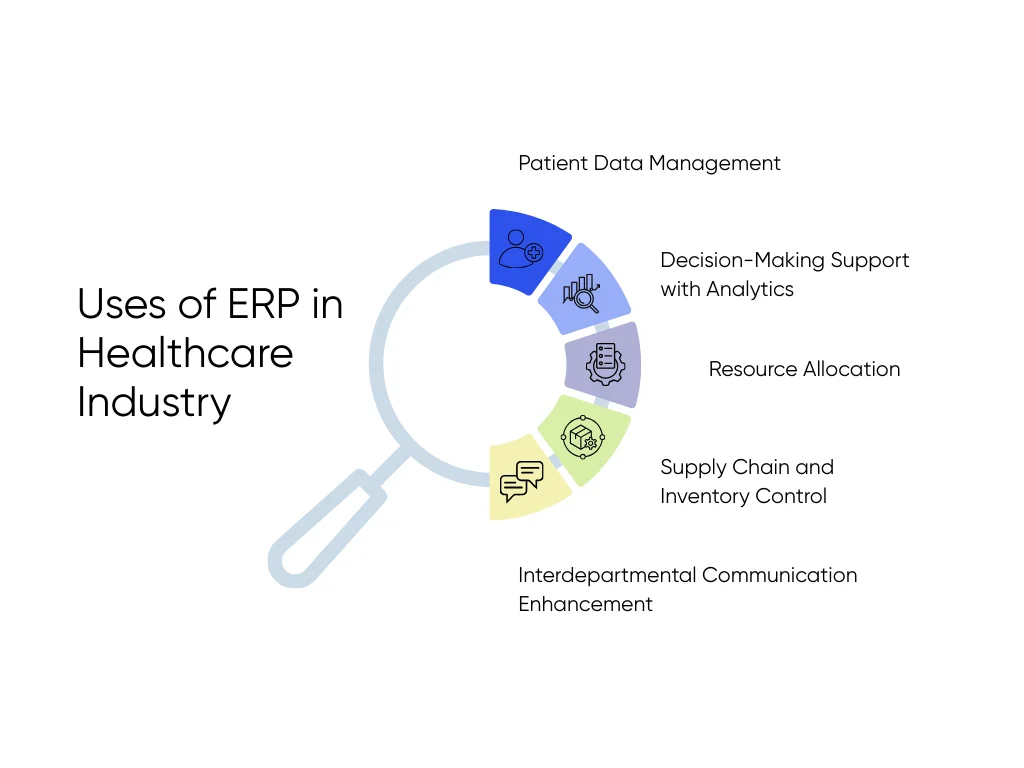
1. Patient Data Management
ERP in healthcare industry is utilized for Patient Data Management, which involves the systematic organization, storage, and retrieval of patient records. It streamlines workflows related to patient data, facilitating accurate and timely access for healthcare professionals across various departments.
Sample Data Managed:
- Personal details
- Medical history
- Treatment plans
- Prescription records
- Administrative Tasks
Healthcare ERP solutions integrate administrative functions such as billing, scheduling, and inventory management into a unified platform. This integration facilitates seamless communication and data sharing across different departments within a healthcare organization. For instance, a centralized billing system within an ERP can automate the billing process, reducing the likelihood of errors and delays.
Additionally, streamlined administrative processes enable healthcare professionals to access real-time information, allowing for more efficient decision-making and resource allocation. For example, an ERP can automate inventory management, ensuring that medical supplies are adequately stocked and minimizing the risk of shortages or wastage.
2. Decision-Making Support with Analytics
One of the critical uses of Enterprise Resource Planning (ERP) complemented by business intelligence, is providing decision-making support through robust data analytics capabilities. ERP systems integrate data from various departments and functions within a healthcare organization, creating a centralized repository of information. This aggregated data can be analyzed using advanced analytics tools to derive valuable insights. For instance, ERP systems can process patient data, financial information, and operational metrics to generate comprehensive reports and dashboards.
These reports can aid healthcare professionals and administrators in making informed decisions about resource allocation, patient care strategies, and overall project management. Furthermore, ERP systems in the healthcare sector enable the implementation of predictive analytics. By analyzing historical data, it can forecast trends and potential outcomes, assisting healthcare providers in anticipating patient needs and optimizing preventive care measures.
3. Resource Allocation
Resource allocation through ERP in healthcare industry involves automating operational processes related to inventory management, staff scheduling, and patient flow. For example, ERP platforms can analyze patient admission patterns and automatically adjust staffing levels accordingly, ensuring that healthcare facilities have the right personnel to handle fluctuations in demand.
Similarly, these systems can track the usage of medical supplies and equipment, allowing for timely replenishment and preventing shortages. Overall, using ERP in the healthcare industry for resource allocation contributes to a more efficient and responsive healthcare platform by ensuring that resources are allocated where and when they are most needed.
4. Supply Chain and Inventory Control
Enterprise Resource Planning (ERP) systems are critical in supply chain management and inventory control. ERP in this context involves integrating various aspects of the supply chain, from procurement and supplier management to distribution and inventory tracking. Healthcare ERP systems enable organizations to streamline and optimize their business processes, ensuring efficient medical goods and materials flow.
Furthermore, ERP systems in the healthcare industry contribute to efficient inventory control by implementing barcode scanning, RFID technology, or other tracking mechanisms. This ensures accurate tracking of stock levels, reduces the risk of errors, and minimizes the chances of overstocking or understocking.
5. Interdepartmental Communication Enhancement
Enterprise Resource Planning (ERP) systems contribute significantly to interdepartmental communication enhancement within the healthcare industry. The use of healthcare ERP software in this context involves the integration of communication channels and information sharing among different departments within a healthcare organization. ERP systems act as a centralized platform consolidating data from various departments, allowing seamless communication and collaboration.
One key use of ERP in interdepartmental communication is sharing real-time information. By integrating data from departments such as finance, human resources, and patient services, ERP systems enable healthcare professionals to access up-to-date information without delays. This ensures all departments work with the latest data, promoting accurate decision-making and coordination.
Key Features of ERP in Healthcare Industry
ERP in healthcare industry makes it easier for professionals to navigate the complexities of modern healthcare management. This cornerstone technology streamlines operations, enhances patient care, and ensures compliance with stringent regulations. Let's delve into the key features of ERP implementation in the healthcare industry, each tailored to meet the precise demands of healthcare organizations.
Key Features:
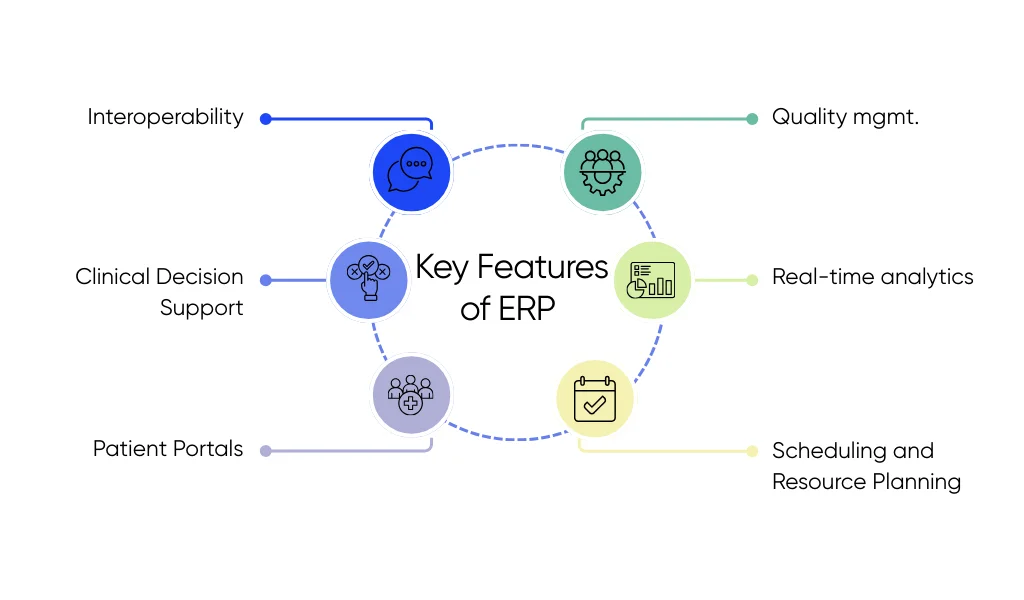
- Interoperability: Interoperability is a key feature enabling seamless communication and data exchange between different healthcare platforms and applications. ERP ensures that disparate systems, such as Electronic Health Records (EHR), billing platforms, and payer enrollment software, can work together cohesively, promoting efficient data flow across the healthcare ecosystem.
- Clinical Decision Support: ERP systems integrate clinical decision support tools that assist healthcare professionals in making informed decisions. These tools analyze patient data, medical literature, and best practices to provide recommendations, enhancing the quality and accuracy of medical diagnoses and treatment plans.
- Patient Engagement Portals: Patient engagement portals within ERP platform empowers patient experiences by providing access to their health records, appointment scheduling, and communication with healthcare providers. This feature enhances patient involvement in their healthcare journey and promotes transparency and communication.
- Quality Management: Quality management features in ERP systems focus on ensuring and improving the quality of healthcare services. This involves tracking and analyzing key performance indicators, patient outcomes, and adherence to industry standards, promoting continuous quality improvement within healthcare organizations.
- Real-time analytics: Real-time analytics tools enable healthcare administrators to access up-to-the-minute insights into various aspects of their business operations. This feature aids in quick decision-making by providing real-time information on patient flow, resource utilization, and financial performance.
- Appointment Scheduling and Resource Planning: ERP systems in healthcare include features for efficient appointment scheduling and resource planning. This functionality optimizes the allocation of resources, such as medical staff and facilities, reducing wait times and improving overall patient satisfaction.
These features collectively empower ERP in healthcare industry to revolutionize administrative processes, elevate the standard of patient care, and bolster healthcare organizations' overall efficiency and effectiveness.
Benefits Of ERP in Healthcare Industry
Embarking on the integration of an ERP system in healthcare industry is a strategic decision that holds the potential to revolutionize organizational success and operational efficiency. In this exploration, we will uncover the substantial advantages that the implementation of ERP brings to healthcare organizations.
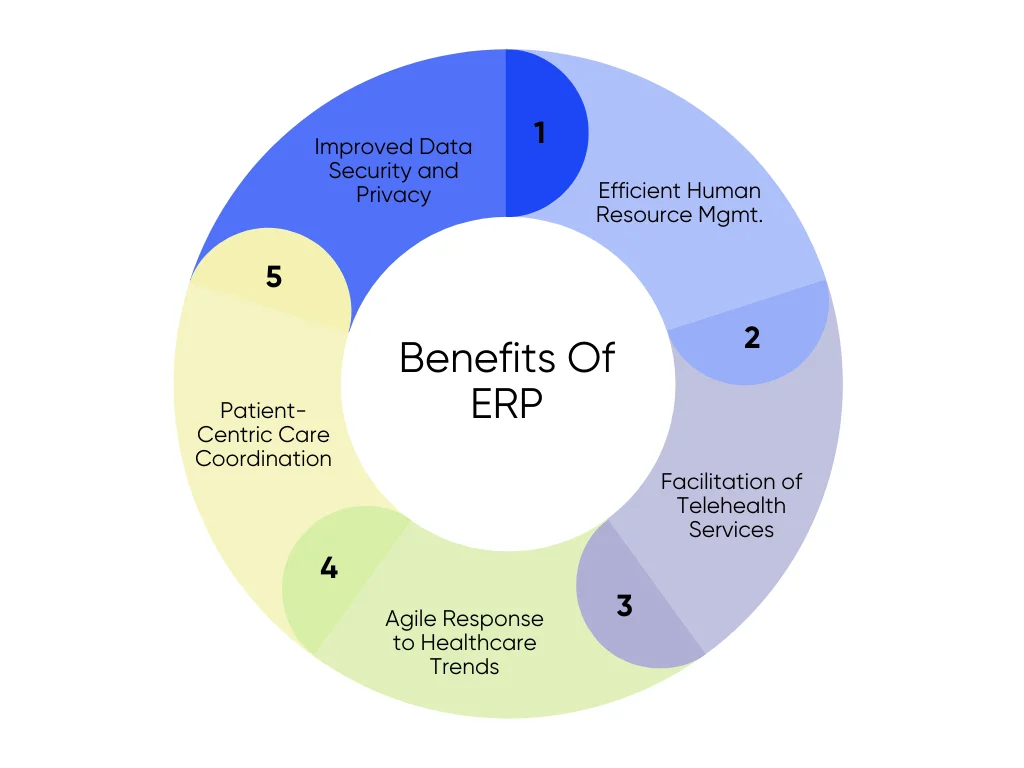
Improved Data Security and Privacy
ERP systems in the healthcare sector enhance data security and privacy, addressing the critical need to safeguard sensitive patient information. These systems incorporate robust security measures such as access controls, encryption, and audit trails, ensuring that only authorized personnel can access and modify confidential data. By establishing a secure framework, ERP helps healthcare organizations comply with privacy regulations and build patient trust in protecting their health information.
Additionally, ERP systems contribute to the prevention of data breaches and unauthorized access by implementing proactive monitoring and alert systems. This heightened focus on data security safeguards patient confidentiality and shields healthcare organizations from potential legal and reputational risks associated with data breaches.
Efficient Human Resource Management
ERP systems streamline human resource management in the healthcare industry, ensuring organizations can effectively manage their workforce. These healthcare systems include modules for personnel management, scheduling, training, and performance evaluation. By automating these HR processes, healthcare providers can optimize staffing levels, ensure compliance with labor regulations, and improve workforce productivity.
Additionally, ERP in healthcare industry facilitates tracking certifications, licenses, and training requirements for healthcare professionals. This ensures that the staff is well-equipped with the necessary skills and credentials to deliver high-quality and safe patient care.
Facilitation of Telehealth Services
In response to the growing prominence of telehealth, ERP systems have become instrumental in transforming and enhancing virtual healthcare services. Here are three key facets through which these sophisticated systems seamlessly integrate with telehealth platforms, reshaping the landscape of patient care and healthcare delivery:
- Seamless Remote Consultations: ERP systems are the technological backbone, enabling healthcare providers to conduct remote consultations effortlessly. This capability transcends geographical constraints, offering patients, regardless of their location, timely access to professional healthcare services through virtual appointments.
- Efficient Medical Record Sharing: Integrating ERP with telehealth platforms ensures the efficient and secure sharing of medical records. This functionality enhances the continuity of care by providing healthcare professionals with a comprehensive view of the patient's medical history during virtual consultations.
- Diverse Telemedicine Activities: ERP systems exhibit remarkable versatility by supporting a broad spectrum of telemedicine activities. From diagnostic procedures to follow-up appointments, these systems enable healthcare providers to deliver diverse healthcare services remotely.
Integrating ERP systems with telehealth platforms represents a paradigm shift in healthcare delivery. It addresses the immediate challenges posed by physical limitations and positions healthcare organizations at the forefront of innovative, patient-centered care.
Agile Response to Healthcare Trends
ERP in healthcare industry empowers organizations to adapt swiftly to emerging trends and changes in the industry. Through real-time analytics and reporting capabilities, ERP enables administrators to monitor key performance indicators, track patient outcomes, and identify areas for improvement. This data-driven approach allows healthcare providers to respond proactively to evolving healthcare trends, ensuring that their practices align with industry best practices and regulatory requirements.
Furthermore, ERP systems support the implementation of new healthcare technologies and practices by providing a flexible and scalable infrastructure. Whether integrating artificial intelligence into diagnostic processes or adopting innovative treatment modalities, ERP facilitates the agile implementation of cutting-edge technologies.
Patient-Centric Care Coordination
ERP software development in healthcare promotes patient-centric care coordination by providing a unified platform for managing and sharing patient information across various departments. These systems facilitate seamless communication and collaboration among healthcare professionals, ensuring the care team has a holistic view of the patient's health journey.
By centralizing patient data, including medical records, treatment plans, and follow-up care, ERP enhances the continuity of quality care and enables healthcare providers to deliver personalized and well-coordinated services.
Key Takeaway
Medical ERP isn’t just a nice-to-have anymore. Having things like telehealth facilities, workforce coordination, supply chain, and data management and analytics all in one place can be a massive boost to efficiency. If your organization is short on manpower or deals with complex operational requirements, healthcare ERP can be your saving grace.
If you’re a healthcare organization considering ERP adoption or modernization, remember that ERPs function best when tailored to your specific sector. Off-the-shelf products for hospitals, clinics, pharmaceutical companies, and insurers may work in standard circumstances, but if you’re trying to do something new, a pre-built solution might hold you back.
This is where Aloa can help. We specialize in building, deploying, and maintaining critical healthcare software, including custom ERP systems designed around your exact operational needs. We deliver AI-powered and scalable ERP solutions that can combine finance, HR, supply chain, clinical data analytics, and more into an all-in-one platform that gives you the control you need to provide better care.
If that sounds like just what you need, connect with us today, and we’ll get back to you within 24 hours. We also have an AI Builder Community on Discord and a newsletter where you can be the first to know about the newest breakthroughs in healthtech.
FAQs
What roles do ERP systems play in healthcare?
ERP systems in healthcare work as a centralized backbone for departments like financial, administrative, supply chain, and actual healthcare operations. Putting everything into a single platform like this means departments can now talk to each other instantly. This lets them coordinate their moves and data a lot better, reducing errors.
Aloa amps this up even further by bringing advanced AI and machine learning into the mix. This can give you features like demand forecasting, inventory and staffing optimization, routine workflow automation, and more.
What are the regulatory requirements for ERP in the healthcare sector?
Healthcare ERP systems must comply with stringent regulations, including HIPAA for data privacy, FDA standards for medical data integrity, and regional compliance frameworks such as GDPR. Meeting each of these regulatory requirements helps protect patient information and maintain trust.
What are the main reasons for pharmaceutical companies to implement ERP systems?
In the pharmaceutical space, ERP systems enhance traceability, optimize production, and help ensure regulatory compliance. ERP also assists in inventory management, providing automated reports and real-time visibility across the entire supply chain.
How do ERP systems enhance decision-making processes in healthcare?
ERP systems enhance decision-making by providing real-time analytics and integrated data from across departments. This allows administrators and clinicians to make faster, data-backed decisions that improve patient outcomes and resource utilization.
What role does ERP play in optimizing resource management in healthcare?
ERP systems optimize resource management by tracking staff allocation, medical supplies, and equipment usage. This leads to better scheduling, reduced waste, and higher efficiency in both clinical and administrative operations.
Can ERP systems in healthcare be integrated with existing electronic health records (EHR)?
Yes, modern ERP systems can seamlessly integrate with EHR platforms to unify clinical and operational data. This integration improves data accuracy, reduces duplication, and enhances the continuity of patient care.
What are the benefits of a cloud-based ERP system for healthcare organizations?
Cloud-based ERP solutions don’t require you to have your own hardware and are fully managed off-site. This significantly reduces IT overhead, streamlines updates, and lets healthcare organizations adopt a more agile posture. Agility lets organizations adapt quickly to the changing demands of patient care and other operations.
How does an ERP system contribute to patient engagement in healthcare?
ERP systems enhance patient engagement through features like online portals for scheduling, billing, and communication. These tools give patients more of an active role in managing their care and improve satisfaction through convenience and transparency.
What considerations should healthcare organizations keep in mind when selecting an ERP vendor?
When choosing an ERP vendor, healthcare organizations should prioritize:
- Scalability
- Regulatory compliance
- Strong data security
- Experience in the healthcare industry.
Aloa has a proven track record in all of those aspects, and we come with another benefit: fully customized ERP solutions tailored to your specific workflows and processes.