

Which type of database is most commonly used in healthcare? In most healthcare sectors, the answer is usually relational databases. But that may soon change. Healthcare organizations are already using multi-platform databases to handle certain types of data better than relational database structures can. Why? To make healthcare data analytics more efficient.
At Aloa, we combine data analytics with our custom AI development practices to create a smart platform that adapts to your needs. Starting with a deep understanding of your goals and challenges, we tailor every part of that system to accommodate your userbase and data structures. Whether you work with relational databases or NoSQL, we can build a solution that’s tuned specifically to your operations.
In this guide, we’ll explore the leading database platforms for healthcare data analytics, highlighting where each excels: from supporting startups to syncing with EHR systems and handling enterprise-grade clinical data workloads.
By the end, you’ll be able to create a shortlist of database options that best align with your analytics needs, security requirements, and long-term growth strategy. Let’s dive in.
TL;DR
- Healthcare data analytics helps healthcare organizations extract actionable insights from clinical data. These insights can inform them on what to do to increase the effectiveness of treatments, security, resource use, and more.
- Given these capabilities, choosing the right analytics platform can be a strategic decision that can significantly mitigate risks and support major operational decisions at scale.
- The top-rated healthcare data analytics solutions span multiple use cases, from enterprise-wide analytics, payment and claims, EMR, and survey and clinical data analytics.
- To operate effectively, healthcare data analytics solutions need to strengthen data security, support evidence-based decision-making.
- Successful healthcare analytics initiatives depend on skilled data analysts with expertise in data science, programming, and healthcare domain knowledge.
- Apart from technical skills, analysts also need soft skills like communication, critical thinking, adaptability, and collaboration. This makes them more effective at translating complex data into valuable insights that can improve day-to-day operations.
Top Rated Healthcare Data Analytics For Startups in 2026
Healthcare data analytics uses data from every possible source to tell you how you can make your processes as efficient and as effective as possible. But choosing a platform for it goes beyond just going with what pairs best with which type of database is most commonly used in healthcare.
1. IBM SPSS - Facilitating Data-Driven Insights to Enhance Patient Care
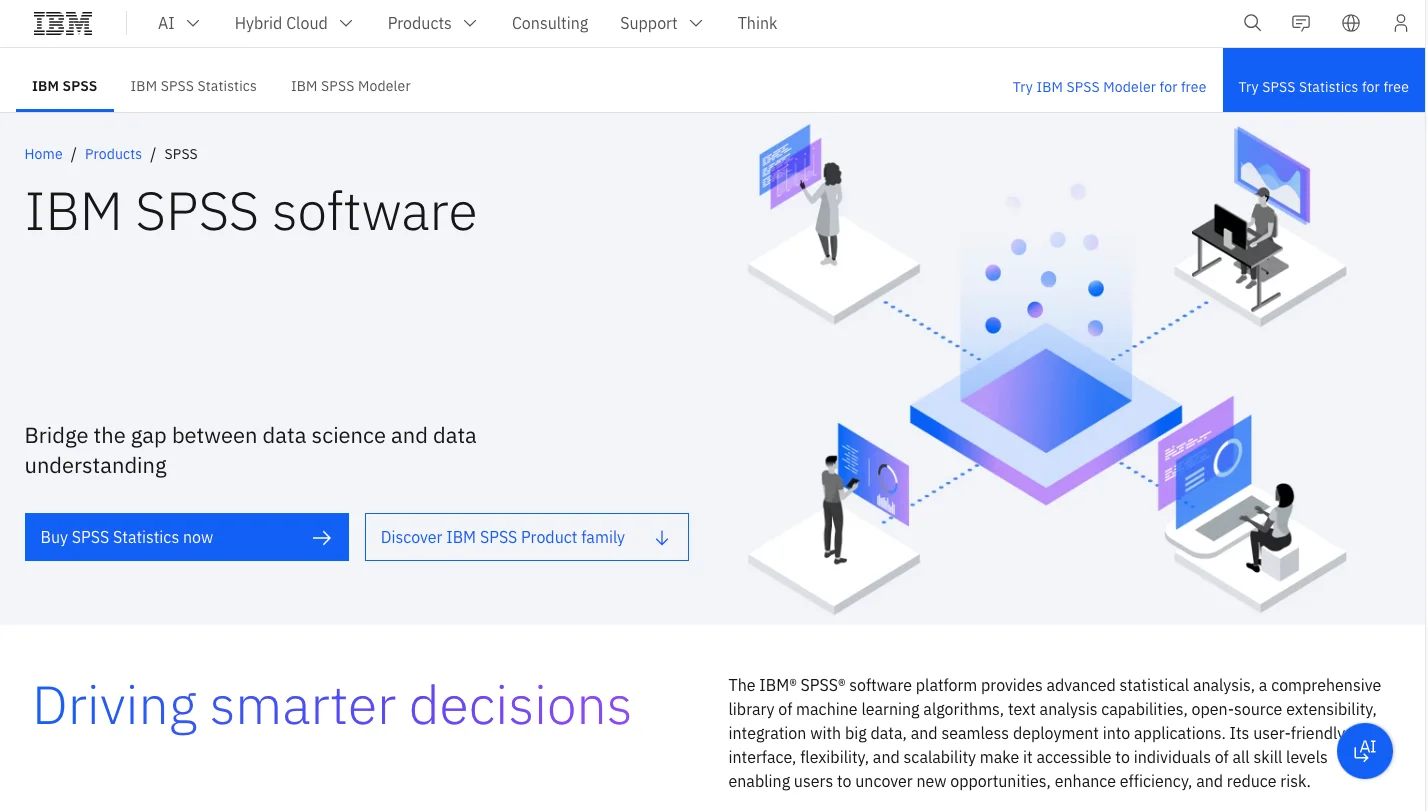
IBM SPSS is a leading data management system specializing in healthcare analytics, offering advanced statistical tools tailored for this sector. Its robust capabilities ensure accurate analysis of diverse data types, adhering to data integrity and confidentiality standards set by organizations like the American Health Information Management Association (AHIMA).
They provide a suite of services specifically designed for clinical analytics. It facilitates real-time data processing, enabling swift decision-making through visualization tools. Notably, stringent security measures safeguard patient data, meet regulatory requirements, and instill trust among users in maintaining data privacy and confidentiality.
Notable Features of Working with SPSS
- Encryption Protocols: IBM SPSS employs robust encryption methods to secure sensitive healthcare data from unauthorized access.
- Access Controls: It provides stringent access controls, allowing only authorized personnel to view or manipulate healthcare data, ensuring data integrity.
- Audit Trails: The platform maintains detailed audit trails, tracking all interactions with healthcare data for transparency and compliance purposes.
- Compliance Standards: IBM SPSS adheres to strict healthcare data compliance standards, such as HIPAA, ensuring data security and regulatory adherence.
IBM SPSS’ Pricing Plans
IBM SPSS offers flexible subscription and traditional business licensing options, catering to various budgetary needs. For the most accurate and updated information, it's best to visit the IBM SPSS official website directly or contact their sales or customer support team.
They collaborate with diverse healthcare entities, including hospitals, research institutions, pharmaceutical companies, and health technology firms. By leveraging SPSS Statistics and Modeler, healthcare organizations ranging from small clinics to multinational corporations optimize patient care protocols, streamline operations, and drive innovative research initiatives.
2. Oracle - Providing a Comprehensive Healthcare Data Analytics Solution
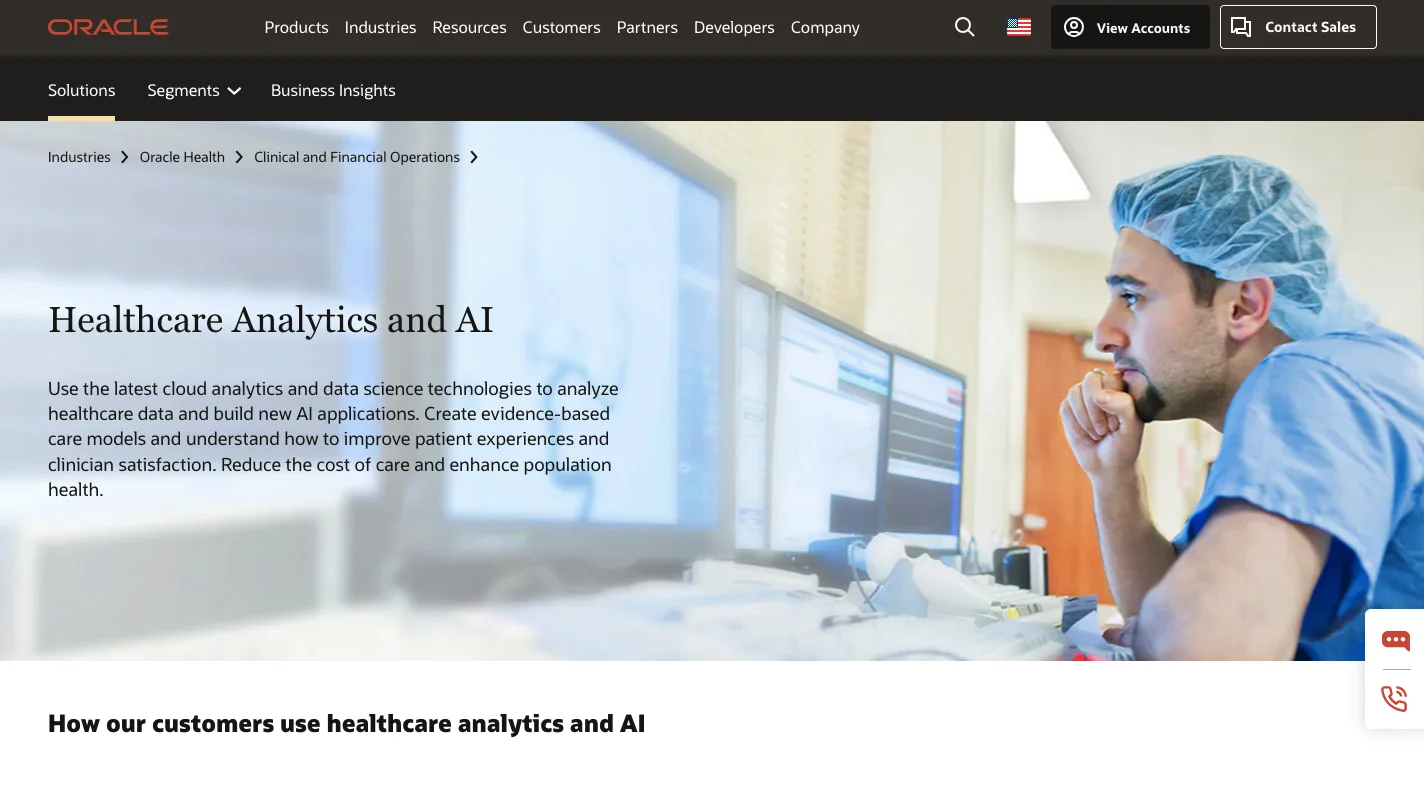
Oracle focuses on healthcare data analytics, which lies in its robust security features. The eHealthcare Analytics database ensures data integrity and privacy through encryption and access control mechanisms aligned with industry best practices recommended by AHIMA. Real-time monitoring and auditing capabilities further fortify security, essential for safeguarding sensitive healthcare information.
Clients benefit from Oracle's comprehensive security solutions in healthcare data analytics. The encryption and access control mechanisms guarantee data privacy, while real-time monitoring and auditing features enable proactive detection and prevention of unauthorized access.
Notable Features of Working with Oracle’s Healthcare Analytics Suite
- Oracle Autonomous Data Warehouse: Ensures robust security measures through built-in encryption, access controls, and automated patching, reducing vulnerabilities.
- Secure Data Ingestion: Facilitates safe and easy data ingestion, maintaining data integrity and confidentiality.
- Integrated Data Management: Offers a unified platform for managing clinical, financial, and operational data securely, enabling comprehensive insights without compromising data security.
- Built-in Machine Learning Security: Incorporates machine learning tools with stringent security protocols, safeguarding sensitive healthcare data during analysis and model development.
Oracle’s Pricing Plans
Oracle's pricing plans for its healthcare analytics platform are tailored based on the specific needs of healthcare organizations. It’s best to contact their sales team for the most accurate and updated information regarding their services.
Businesses such as healthcare systems and research institutes benefit from Oracle's analytics. Clients benefit from customizable pricing structures that fit their data analytics needs, optimizing costs while improving healthcare outcomes.
3. Cotiviti - Driving Meaningful Consumer Engagement
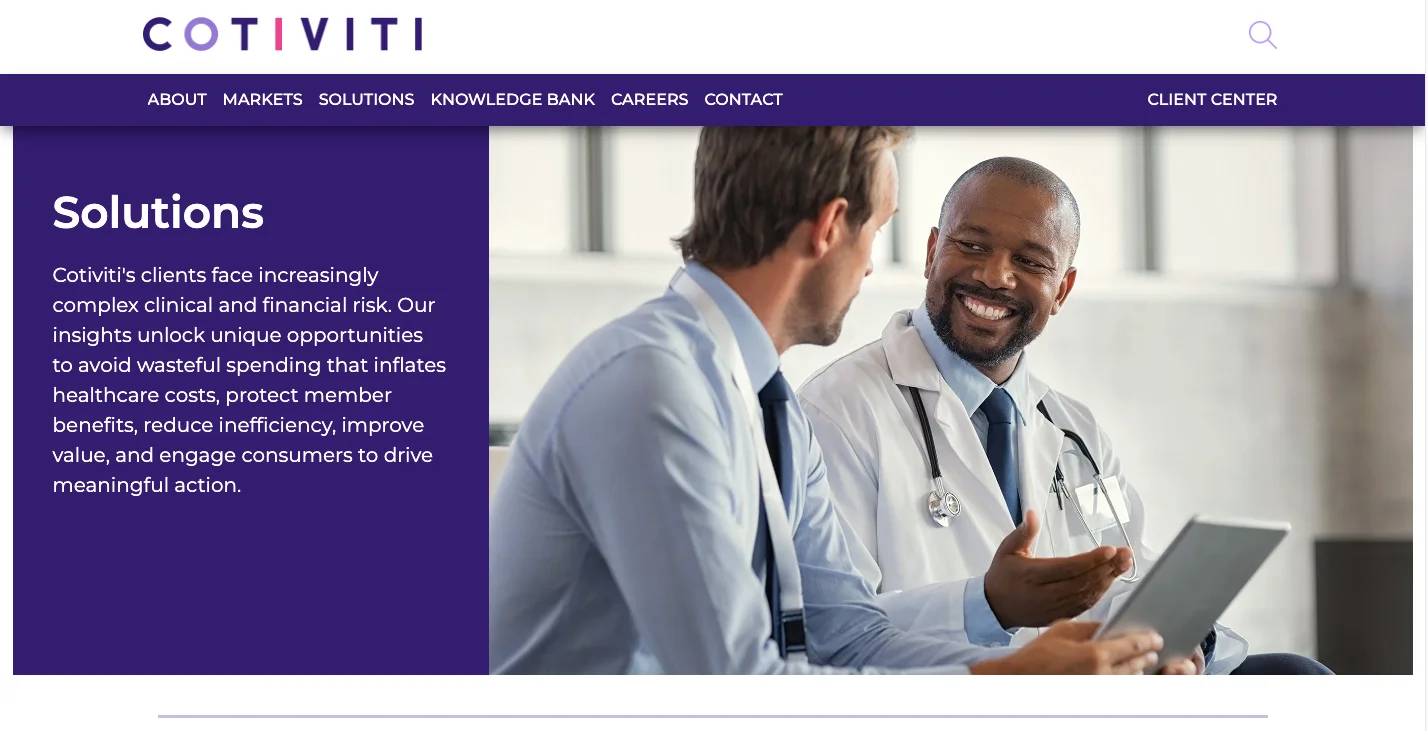
Cotiviti specializes in providing secure databases for healthcare data analytics, ensuring compliance with industry standards like HIPAA and HITECH. Their expertise is safeguarding sensitive patient information while offering real-time insights and predictive analytics for enhanced outcomes.
Their services revolve around secure healthcare data analytics, offering clients a platform that ensures data security and compliance. Through their expertise, they provide real-time insights and predictive analytics, aiding clients in improving patient outcomes while handling large volumes of healthcare data seamlessly.
Notable Features of Working with Cotiviti
- Payment Accuracy Suite: Securely manages claims, reducing inefficiencies while safeguarding sensitive payment data.
- Risk Adjustment Solutions: Ensures accurate reimbursement while prioritizing secure data handling and protection.
- Quality and Performance Enhancement: Safely drives higher value healthcare by securely managing clinical and financial risks.
- Tailored Consumer Engagement: Encourages action while maintaining data security through empathetic, multi-channel approaches.
Cotiviti’s Pricing Plans
Cotiviti's pricing plans are typically tailored to their client's specific needs and scale in the healthcare industry. These plans can vary based on the required scope and depth of services, often structured as subscription-based models or customized agreements.
They engage with various businesses, including healthcare payers, providers, and retail entities, offering tailored analytics and solutions. You can complete the form on their website, providing details and specifying your area of interest or query.
Best Healthcare Data Analytics for Electronic Medical Records
Choosing the right healthcare data analytics for electronic medical records is essential for improving your institution's efficiency and patient care. These databases use robust encryption and authentication measures for security. Partner with the best one who understands your needs, and you'll boost data management, insights, and patient care decisions.
4. Epic Systems - Enhancing Patient Care and Operational Workflows
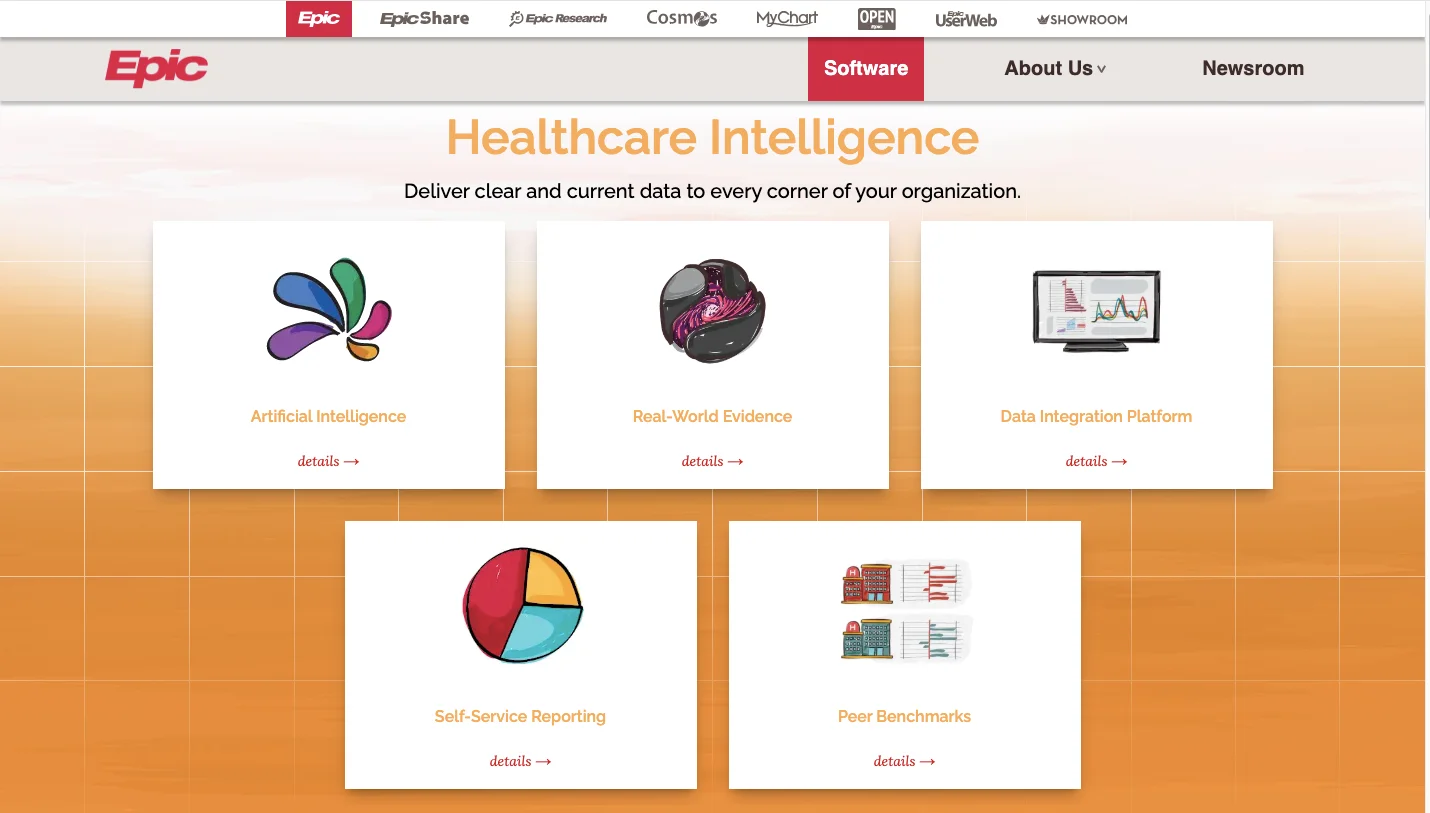
Epic Systems specializes in robust security measures for healthcare data analytics in electronic medical records. They focus on ensuring data privacy and integrity through stringent access controls, encryption protocols, and compliance with industry standards like HIPAA and HITECH.
Clients benefit from top-notch security features embedded within the platform. These include advanced encryption for data protection, regular security assessments to identify vulnerabilities, compliance with healthcare regulations, and robust access controls to safeguard patient information.
Notable Features of Working with Epic Systems
- Data Encryption: Epic employs robust encryption methods to safeguard sensitive healthcare information like electronic medical records, ensuring data remains secure during transmission and storage.
- Access Controls: The platform implements granular access controls, allowing organizations to manage and restrict user access based on roles and permissions, enhancing data security.
- Audit Trails: Epic's platform maintains detailed audit trails, enabling organizations to track user activity and changes to sensitive data, ensuring accountability and compliance.
- Compliance Standards: The platform adheres to stringent healthcare data security regulations, such as HIPAA, ensuring client data meets regulatory requirements.
Epic Systems’ Pricing Plans
They offer tailored pricing plans, ensuring scalability and flexibility based on the needs of healthcare organizations. You can contact them via email for information on their pricing or specific packages they offer.
They collaborate with prominent healthcare entities, including hospitals, clinics, and medical research institutions, offering EMR solutions that streamline data analytics, improving patient care and operational efficiencies.
5. Optum - Providing Real-Time Insights into Patient Care
Optum, a division of UnitedHealth Group, stands out for its exceptional expertise in securely managing electronic medical records. Renowned for its robust security measures, it ensures the utmost privacy and protection of sensitive patient information.
They offer services tailored to provide valuable insights through healthcare data analytics. Their platform equips healthcare professionals with real-time data, enabling informed decision-making to improve patient outcomes while adhering to recommended best practices.
Notable Features of Working with Optum
- Advanced Encryption: The platform employs top-tier encryption protocols, safeguarding sensitive healthcare data for electronic medical records against unauthorized access or breaches.
- Role-Based Access Controls: Optum provides granular access controls, ensuring that only authorized personnel can view or manipulate specific datasets, bolstering overall security.
- Compliance Adherence: Their system adheres rigorously to industry standards and regulatory requirements, ensuring compliance with healthcare data security mandates.
- Continuous Monitoring: Optum implements constant monitoring systems that promptly detect and respond to suspicious activities, fortifying the platform's security posture.
Optum’s Pricing Plans
Optum offers tailored pricing plans designed to suit the unique needs of various businesses. You can fill out their inquiry form to discuss your project needs for customized pricing.
They collaborate with various entities, including healthcare providers, insurance companies, pharmaceutical firms, and government healthcare agencies. Clients benefit from Optum's expertise in harnessing EMR data to drive better healthcare outcomes.
Best Data Analytics for Health Surveys and Clinical Data
Selecting the right data analytics for health surveys and clinical data is crucial. These databases provide valuable insights into patient trends, treatment efficacy, and healthcare outcomes. Choosing one that understands your requirements is vital, guaranteeing secure storage, transmission, and interpretation of complex health data.
6. Qualtrics - Leveraging Healthcare Data Analytics for Health Surveys
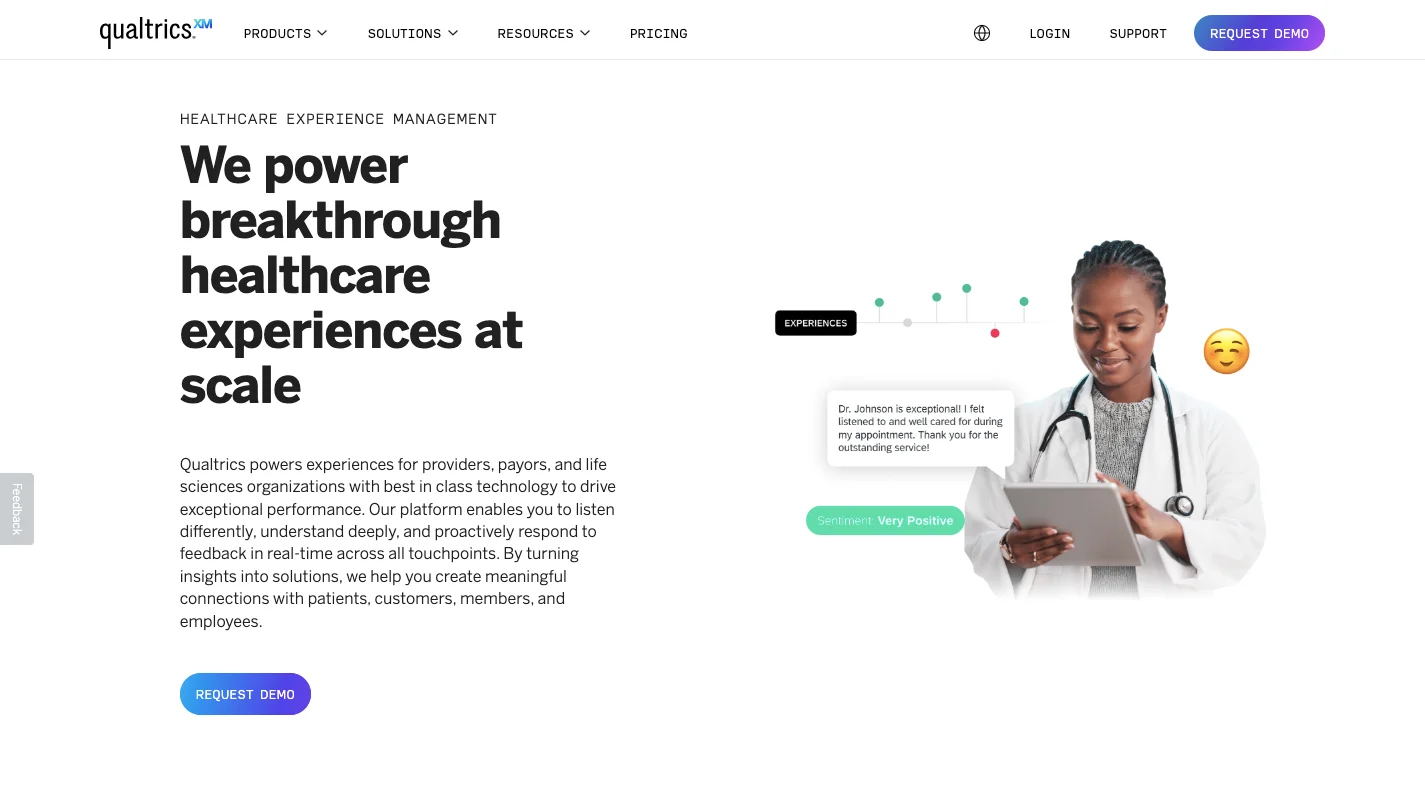
Qualtrics specializes in secure healthcare data analytics, offering tailored solutions for health surveys and clinical data. Their platform provides customizable features ensuring easy access, analysis, and sharing of sensitive medical information while adhering to strict privacy laws like HIPAA.
They offer healthcare providers and professionals a reliable and compliant platform for managing health surveys and clinical data. Their focus on security ensures the protection of sensitive information, providing peace of mind when handling patient records.
Notable Features of Working with Qualtrics
- Robust Security Measures: The platform ensures data security through HITRUST certification, compliance with regulatory standards (such as FedRAMP and GDPR), and secure integrations, ensuring patient data privacy.
- Omnichannel Listening: Provides an omnichannel approach to unsolicited listening, allowing healthcare providers to understand patient sentiments securely across various communication channels.
- AI-Powered Personalization: Utilizes AI to predict patient needs securely, enabling personalized healthcare experiences without compromising data integrity.
- Comprehensive Compliance Tools: Offers tools and integrations like Magnet benchmarks and AHRQ Culture of Safety Survey to aid clients in meeting regulatory requirements while prioritizing patient-centric experiences securely.
Qualtrics’ Pricing Plans
Qualtrics offers flexible pricing plans tailored to the specific needs of healthcare, including providers, payers, and life sciences organizations. You can fill out the form on their website to request more information about their Experience Management Platform, and someone from their sales team will contact you.
They collaborate with various businesses, including healthcare providers, payers like insurance companies, and life sciences organizations. These partnerships focus on enhancing patient experiences, optimizing employee well-being, and driving innovation in the healthcare industry through data-driven insights.
7. SAS - Using Advanced Analytics and AI to Turn Data into Intelligence
SAS excels in healthcare data analytics, particularly managing health surveys and clinical data. Leveraging its robust analytics platform, SAS specializes in transforming raw healthcare data into actionable insights. They are equipped to handle the complexities of health-related information, ensuring accuracy, reliability, and compliance with industry standards.
They offer comprehensive solutions for healthcare organizations seeking meaningful insights from their data. Their analytics tools enable efficient management and analysis of health surveys, enabling organizations to extract valuable information and trends crucial for decision-making.
Notable Features of Working with SAS
- End-to-End Encryption: SAS implements encryption protocols across the data lifecycle, securing information in transit and at rest.
- Role-Based Access Controls: The platform employs granular access controls, ensuring that only authorized personnel can access specific healthcare datasets.
- Anomaly Detection: SAS utilizes advanced analytics to detect irregularities or potential breaches in healthcare data, enabling proactive security measures.
- Compliance Frameworks: The platform offers built-in compliance frameworks tailored to the healthcare sector, aiding organizations in meeting regulatory requirements.
SAS’ Pricing Plans
SAS provides flexible pricing plans tailored to specific business needs. Fill out the form on their website with your details and project description.
They collaborate extensively with healthcare providers, pharmaceutical giants, and academic institutions, catering to their unique data analytics requirements in the healthcare sector. Clients benefit from customized solutions addressing clinical data challenges at various scales.
8. MedeAnalytics - Transforming Complex Data into Actionable Insights
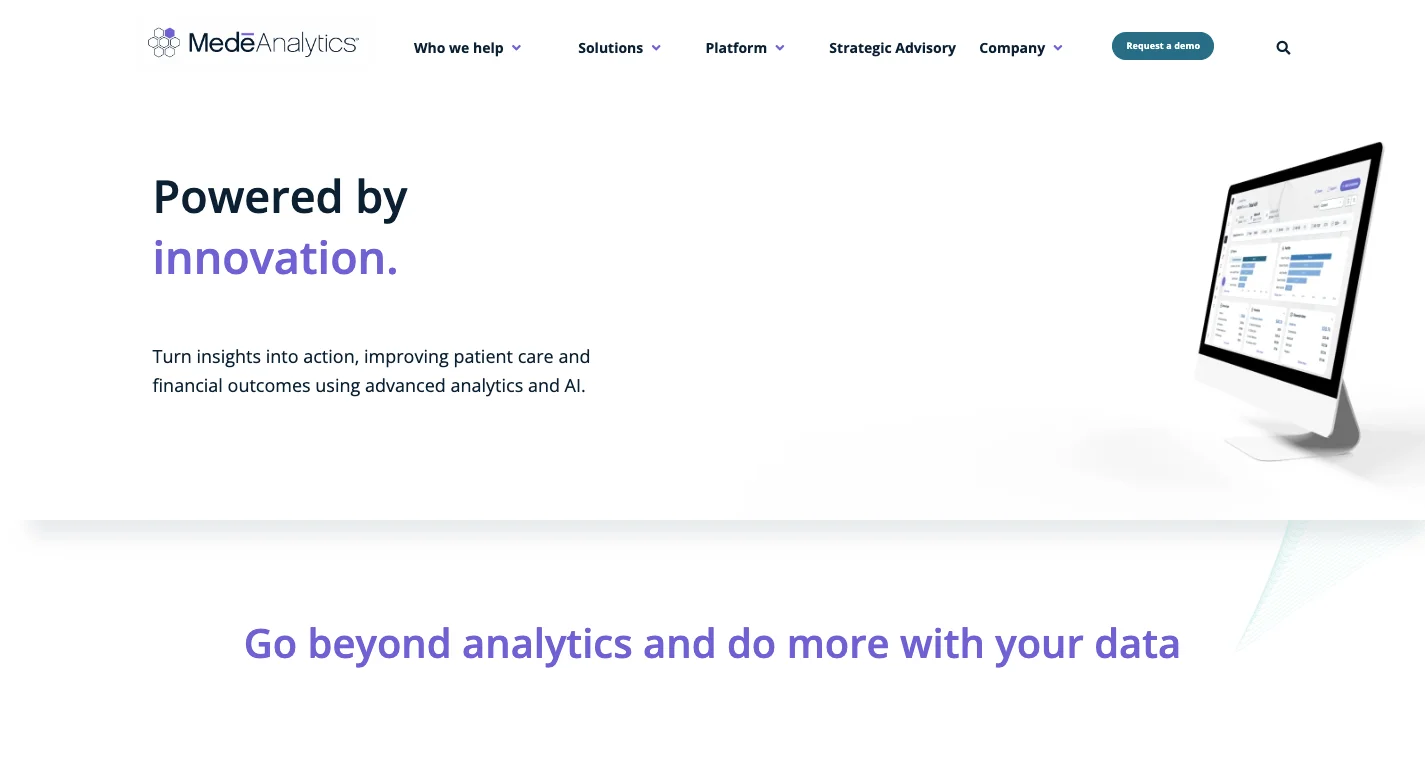
MedeAnalytics specializes in transforming complex healthcare data into actionable insights. Their expertise lies in providing robust, actionable, and predictive analytics solutions for healthcare payers, providers, and government programs. They focus on improving value-based care initiatives, revenue cycles, and operational metrics.
Their services offer valuable benefits to clients by enabling them to make informed decisions based on data-driven insights. For healthcare providers, they streamline revenue cycle management and improve staff efficiency. With a focus on swift actionable insights, MedeAnalytics ensures quick ROI while prioritizing robust security for sensitive healthcare data.
Notable Features of Working with MedeAnalytics
- Robust Encryption: Ensures data remains secure during transmission and storage, employing top-tier encryption protocols.
- Role-Based Access Control: Granular access control mechanisms restrict data access to authorized personnel, maintaining confidentiality.
- Regular Security Audits: Conducts frequent security audits and assessments to identify vulnerabilities and ensure compliance with industry standards.
- Data Governance Protocols: Implements stringent data governance protocols to maintain integrity, confidentiality, and availability of healthcare data.
MedeAnalytics’ Pricing Plans
MedeAnalytics offers tailored pricing based on healthcare organizations' specific needs and scale. They provide an option to request a demo or consultation using a form on their website. You can fill in your details and any specific questions or requests regarding their services.
They collaborate with healthcare providers, health systems, payers, government Medicare and Medicaid programs, and other healthcare entities. Clients benefit from comprehensive solutions for clinical data analytics that optimize operations and improve patient care.
Essential Skills to Look for in Top Healthcare Data Analysts
When choosing top talent in healthcare data analytics, looking for individuals with a blend of technical expertise and soft skills for informed decision-making based on comprehensive data analysis is essential. Prioritize healthcare data analysts with these qualities to foster successful outcomes for your healthcare initiatives.
Technical Skills
When selecting healthcare data analysts, it's crucial to prioritize specific technical skills. Look for professionals who excel in the following key areas:
Data Science and Analytics
Data science and analytics are crucial in deriving insights and facilitating decision-making in healthcare data analysis. This encompasses the ability to analyze data and the essential skill of meticulous data capture. Healthcare data analysts must master statistical analysis, data modeling, and machine learning to excel in their field.
Programming Skills
Fluency in programming languages such as Python, R, SQL, and Java is essential for healthcare data analytics. These skills are necessary for data cleansing, modeling, and harnessing big data analytics to extract insights in healthcare settings. Additionally, knowledge of machine learning algorithms can automate data analytics to identify trends and patterns.
Healthcare Domain Knowledge
Effective healthcare data analytics relies heavily on healthcare domain knowledge, including clinical expertise, medical terminology, and population health. Professionals with clinical experience offer valuable insights for data analysis, interpreting medical records accurately, and identifying trends to improve health outcomes.
Data Security and Compliance
Healthcare data analytics necessitates strict adherence to regulations concerning data security and privacy. Essential skills include proficiency in Health Insurance Portability and Accountability Act (HIPAA) regulations, data encryption techniques, and secure data storage practices.
Soft Skills
When selecting healthcare data analytics professionals, it's important to consider more than just technical expertise. Soft skills are also essential. Look for experts that possess crucial soft skills, including:
Communication Skills
Effective communication is vital for healthcare data analysts to meet client needs. Clear conveyance of intricate data insights to non-technical stakeholders is essential. Strong communication fosters collaboration for successful project outcomes.
Critical Thinking
Practical analysis of medical records and healthcare data requires solid critical thinking skills. Evaluating information, identifying patterns, and drawing conclusions are crucial for making informed decisions and recommendations.
Adaptability and Learning Agility
Adaptability and learning agility are essential for staying up-to-date with industry developments and quickly understanding and applying new concepts. These skills empower healthcare data analysts to provide accurate insights for improving patient care and outcomes, contributing to better decision-making based on medical records and various data types.
Teamwork and Collaboration
Effective teamwork and collaboration are essential in healthcare data analytics to guarantee the accuracy and completeness of medical records and other data types. Partnership promotes creativity, and effective communication is the best way to ensure that team members understand each other's roles and responsibilities.
Key Takeaway
Thanks to big data, health organizations can now store more data, in more detail, than ever before. And with the latest in AI and ML, all of that data can power data analytics that can save resources, preempt problems, and most importantly, save lives. But the best data analytics platforms go beyond compatibility with which type of database is most commonly used in healthcare. As we show above, effective data analytics brings together a wide variety of data structures to cover every possible angle.
That said, there is no one-size-fits-all solution across the world of healthcare. Startups, hospitals, research institutions, and insurance companies all work with different data volumes and operational requirements. The top-rated data analytics stacks we reviewed here work great for their standard use cases, but as data complexity grows, you may need something that’s more purpose-built for yours.
Aloa can deliver just that. We design and build secure, scalable healthcare data architectures tailored to your exact analytics objectives. Need a hybrid database instead of a purely relational one? We can architect, implement, and maintain it for you. Whatever your needs, Aloa can help you turn your raw data into valuable intelligence you can act upon.
If that sounds interesting to you, let’s talk. We’ll get back to you in less than a day to talk about all the possibilities we can unlock. If you’d like to connect with fellow tech leaders, we also have an AI Builder Community. You can also subscribe to our newsletter to receive the latest updates on healthtech, data analytics, and AI-driven innovation.
FAQs
Which type of database is most commonly used in healthcare?
The most commonly used type of database in healthcare are relational databases. Relational databases structure patient and clinical data in tables with defined relationships using paired keys to maintain data integrity. This makes querying and reporting more efficient through standardized SQL-based access to structured records. It also helps eliminate redundant manual entry and supports secure, consistent data sharing across facilities.
At Aloa, we work with relational databases as well as all of the other data structures that health organizations are adopting, such as semi-structured, geospatial, time-series, and more. We can blend all of these into a unified data analytics platform that’s specifically designed to generate useful insights from your business processes, as opposed to a SaaS solution built for more general scenarios.
How do relational databases improve healthcare outcomes?
By structuring and linking patient, clinical, and operational data in a consistent format, relational databases enable:
- Accurate tracking of treatments, outcomes, and care histories
- Support for faster decision-making
- Better care coordination
- Better interconnection with multiple clinical and admin systems
- Improved patient safety
Which platforms are best for managing health data with top-level security?
Solutions from big tech companies like AWS HealthLake, Microsoft Azure for Healthcare, and Google Cloud Healthcare API tend to win at security. All of these platforms offer HIPAA- and GDPR-aligned cloud infrastructure, encryption, and data analytics capabilities designed specifically for sensitive medical information.
What are the essential database skills that HIM professionals need to know?
Healthcare Information Management professionals need to understand database design, relational models, and SQL for query and reporting tasks. Expertise in the broader concepts of data modeling, normalization, and schema design also help support EHRs and other database systems by ensuring data accuracy, reducing redundancy, and facilitating reliable reporting.
What role does data security play in healthcare databases beyond compliance with HIPAA?
Beyond simply meeting HIPAA, strong data security in healthcare databases affords the following advantages:
- Protects patient confidentiality and trust
- Prevents unauthorized access
- Minimizes disruptions that could decrease operational efficiency
- Ensures data integrity across interconnected systems
Effective database security involves advanced encryption, access controls, and continuous monitoring to guard against cyber threats.
What are the benefits of using open-source databases like MySQL in healthcare?
Open-source databases such as MySQL and PostgreSQL provide cost-effective, flexible, and customizable solutions for managing health data. They allow integration with various healthcare systems while maintaining security through encryption and access control features.
How do healthcare databases support real-time healthcare delivery?
Modern healthcare databases provide real-time access to updated patient records across departments. This allows clinicians to view the latest test results, recommended medications, and care notes instantly. The speed this gives to clinical decision-making can be invaluable in emergency situations, in addition to enhancing the overall coordination of care delivery.
What are the challenges in implementing e-HIM in healthcare facilities?
Electronic HIM systems face the following challenges:
- Ensuring data accuracy and privacy
- Integrating legacy systems with new technologies (often more than one)
- Equipping staff with the expertise to manage the new digital infrastructure
- Addressing interoperability standards
- Maintain infrastructure that can support seamless data exchange across platforms